Xibe Ethnic Group
Introduction
The Xibe Ethnic Group, also known as the Xibo, is a distinct ethnic group primarily residing in the Qapqal Xibe autonomous county within the Xinjiang Uygur autonomous region of Northwest China. Known for their rich cultural heritage and historical significance, the Xibe people have managed to preserve and pass down their traditional crafts and customs through generations. The ancient Xibe city is a testament to this cultural preservation, showcasing various traditional practices, crafts, and the unique lifestyle of the Xibe people.
History
Origins
The origins of the Xibe ethnic group are deeply rooted in the history of China's ethnic landscape. Initially part of the broader Tungusic-speaking peoples of Northeast Asia, the Xibe have been identified as part of the Manchu family of peoples. Historically, they lived in areas that are now part of modern-day Liaoning and Jilin provinces. Over time, the Xibe people developed their own distinct identity, which sets them apart from other ethnic groups in China.
Migration and Settlement
A significant event in the history of the Xibe people occurred during the reign of Emperor Qianlong of the Qing Dynasty (1644-1911). In a strategic move to garrison the western borders, groups of Xibe soldiers and their families were ordered to migrate westward to Xinjiang. This migration was not just a military maneuver but also a settlement process that led to the establishment of permanent Xibe communities in the region. Today, the descendants of these migrants commemorate this important historical event with colorful activities on the 18th day of the fourth month on the traditional Chinese calendar. The migration history is celebrated not just as a past relocation but as a foundational aspect of Xibe identity, deeply influencing their culture and community structure in Xinjiang.
Culture
Language
The Xibe language is a member of the Tungusic branch of the Altaic language family. It is closely related to the Manchu language, which reflects the historical ties between the Xibe and the Manchu people. Despite the small number of speakers today, efforts have been made to preserve the Xibe language, which plays a crucial role in maintaining ethnic identity and cultural heritage.
Craft
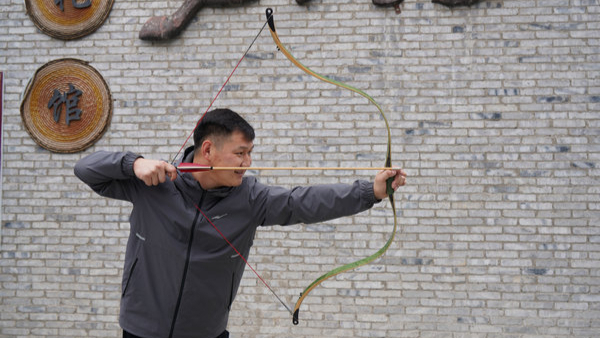
Craftsmanship is a vital part of Xibe culture, with a particular emphasis on the making of traditional bows and arrows. The Xibe people have a long-standing tradition of archery, which was initially used for hunting. This craft has been preserved and passed down through generations, becoming a symbol of cultural heritage for the Xibe. The Bow and Arrow Museum in the Xibe ancient city showcases this enduring tradition with exhibits spanning various designs and eras of bows and arrows. Artisans like Zhao Hu, a notable member of the Xibe community, continue to promote and teach traditional bow-making techniques, which were designated as a national intangible cultural heritage in 2008.
Festivals
Festivals play an essential role in Xibe cultural expression, serving as communal events that reinforce social bonds and cultural continuity. The annual commemoration of the Xibe migration is among the most significant festivals, involving traditional performances, rituals, and archery contests that celebrate their rich history and heritage.
Traditional Clothing
Traditional Xibe clothing is characterized by its intricate embroidery and vibrant colors, reflecting the aesthetic values and cultural identity of the Xibe people. These garments are not only worn during daily life but are also prominently featured during festivals and cultural events, symbolizing pride and a deep connection to their ancestry.
Social Structure
Family and Kinship
The Xibe social structure is deeply rooted in family and kinship ties. Traditionally, extended families lived together in close-knit communities, emphasizing the importance of collective responsibility and cooperation. Kinship is a fundamental aspect of their social organization, influencing marriage, inheritance, and social obligations.
Community Organization
Community organization among the Xibe is closely tied to their historical experiences and cultural practices. Villages often form the basic unit of social organization, where communal decision-making and mutual aid are prevalent. This structure has been instrumental in preserving their culture and navigating changes brought on by modern influences.
Economy
Traditional Occupations
Historically, the economy of the Xibe people was based on agriculture, hunting, and craftsmanship. The production of traditional bows and arrows not only served practical purposes but also held cultural significance. This craftsmanship remains a vital aspect of their traditional economic activities.
Modern Economic Activities
In contemporary times, the Xibe economy has diversified. With the development of tourism in the Xinjiang region, traditional crafts have gained renewed vitality, attracting visitors interested in cultural experiences. The Qapqal Xibe autonomous county has seen increasing tourist numbers, which has bolstered the local economy and provided opportunities for cultural exchange and preservation.
Cultural Preservation
Preserving the unique cultural heritage of the Xibe people is a significant concern in contemporary society. Initiatives such as cultural festivals, the establishment of museums, and intangible cultural heritage workshops aim to safeguard traditional crafts, language, and customs. These efforts are crucial in ensuring that the rich cultural legacy of the Xibe people is passed on to future generations, maintaining their identity within the diverse tapestry of China's ethnic groups.








